How dried flower arrangements are actually made
The process takes weeks, not hours. Here is what happens in the studio
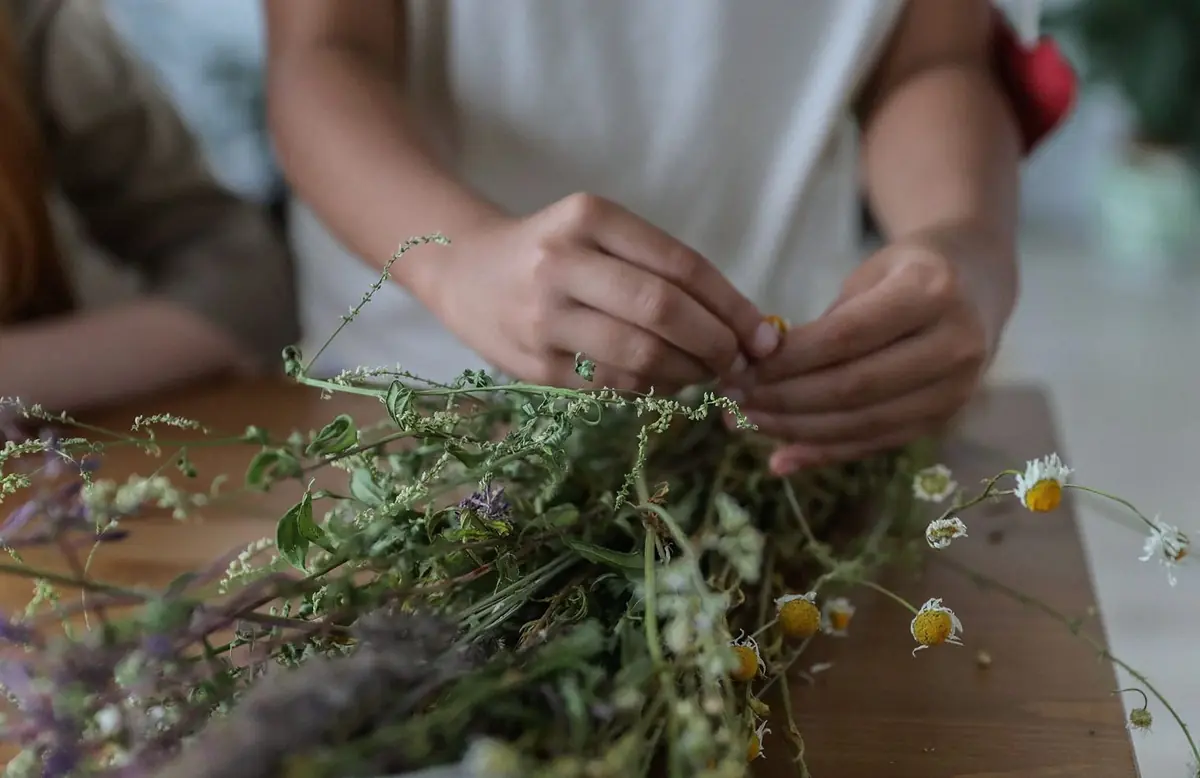
Dried flower arrangements have become popular in Japan over the past several years, and with that popularity has come a lot of pre-dried stems sold in craft shops and online. The process of drying flowers properly in a studio is slower and less predictable than buying pre-dried material, but the results are different in ways that are worth understanding.
Choosing which stems to dry
Not every flower dries well. Flowers with high water content. Like tulips or most lilies. Tend to collapse or go mouldy before they dry properly. The best candidates are flowers with lower moisture content and sturdy petals: hydrangea, lunaria, statice, pampas grass, cotton, and most seed heads. Dahlias can be dried but they are unpredictable; some varieties hold their shape beautifully and others shrivel.
At Quick Field Meadow, we decide which stems to dry when we buy from the growers, usually in late summer, and we select stems for drying rather than pulling them from fresh stock. The two uses require slightly different stages of development.
The drying process
Stems are tied in small bundles of five to eight and hung upside down from a wooden rack in the studio. Hanging upside down keeps the stems straight as they dry; if you leave them upright, the heads tend to droop. The studio is kept as dry as possible during the drying period, which in Japan's humid early autumn means running a dehumidifier for much of September.
The drying time varies by stem. Lunaria pods dry in about ten days. Hydrangea takes three to four weeks and changes colour significantly as it dries. The dusty, muted tones of a dried hydrangea are quite different from the fresh flower. Pampas grass is the most variable; some bundles are ready in two weeks and others take a month.
- Tie stems in small bundles of 5-8
- Hang upside down in a dry, ventilated space
- Check every few days for mould on high-moisture stems
- Do not rush. Stems pulled too early will continue to shrink and distort
Assembly and finishing
Once the stems are dry, assembly is relatively quick. About forty minutes for a standard wreath. The base is a wire ring wrapped in natural raffia, and the stems are attached in overlapping layers using fine florist wire. No glue is used, which means the wreath can be partially disassembled and repaired if a stem breaks.
The finished wreaths are not sprayed or treated with anything. They will fade gradually over time, which is a natural process rather than a defect. Most wreaths look good for one to two years before the colours become noticeably muted.
The autumn dried collection is described on the Products page. Each piece is different because the drying process is never perfectly uniform, and that variation is part of what makes them worth making.